

WordPress Maintenance vs. WordPress Management: What Growing Businesses Actually Need
The conversation around WordPress maintenance vs management has evolved. For years, “WordPress maintenance” meant something simple: keep the site updated, back it up, and make sure it doesn’t get hacked. And for a while, that was enough.
But websites have changed. They’re no longer digital brochures — they generate leads, process donations, track conversions, run ads, and represent your brand 24/7. That’s where the real distinction between WordPress maintenance and WordPress management starts to matter.
So the real question isn’t whether you need maintenance.
It’s whether maintenance alone is enough.
What WordPress Maintenance Really Means
At its core, maintenance is about protection.
- It’s the regular updates to WordPress core, plugins, and themes.
- It’s security monitoring and malware scanning.
- It’s reliable backups — so if something breaks, you can restore it quickly instead of scrambling.
If you’d like a deeper breakdown of what a proper plan should include, here’s a full overview of what’s included in a WordPress maintenance package.
Maintenance keeps your site stable. It prevents small issues from turning into emergencies. It protects what already exists.
For small websites that rarely change, that may be completely sufficient. If your site is mostly informational and doesn’t directly drive revenue, a structured maintenance plan may be exactly what you need.
But for many growing businesses, that’s only the starting point.
Where Management Comes In
WordPress management builds on maintenance. Instead of simply keeping your site running, management focuses on how it performs — and how it improves over time.
That means stepping back and asking bigger questions:
Is your site loading as fast as it should?
Are your forms actually tracking conversions correctly?
Are you ranking for the right keywords — or just hoping you are?
Are paid ads sending traffic to pages that convert?
Is your hosting environment helping performance or quietly limiting it?
Management includes hosting oversight, performance monitoring, SEO tracking, analytics integration, reporting, and ongoing optimization. But more importantly, it includes direction.
> Maintenance protects what you have.
> Management improves what you have.
WordPress Maintenance vs Management – The Real Difference
Tools and automation help, but nothing replaces having someone who is actually paying attention to your site.
Many businesses assume their hosting provider “covers everything.” In reality, most hosts only maintain the server environment — not your plugins, your tracking scripts, your forms, or your SEO performance. That gap is where confusion around WordPress maintenance vs management often begins. Maintenance focuses on stability. Management focuses on responsibility — someone accountable for how the entire website ecosystem is functioning.
When you rely on regular WordPress maintenance from a real human, you get more than updates — you get someone who catches issues before they impact traffic, conversions, and revenue.
That includes:
Maintenance
Management
> Maintenance protects.
> Management improves.
When Is Maintenance Enough?
Maintenance may be all you need if:
Your website rarely changes.
You’re not running ads.
You don’t actively track conversions.
Your site functions more as a digital brochure than a growth tool.
In those situations, reliable updates, security protection, and backups are the priority.
We’ve also explained how daily WordPress maintenance can prevent expensive downtime and emergency repairs — and for many businesses, that peace of mind is enough.
When Management Makes More Sense
Management becomes more valuable when your website directly impacts revenue or growth.
If your site drives leads, donations, or sales…
If SEO matters to your long-term strategy…
If you’re investing in paid traffic…
If you need consistent content updates…
If you want monthly insight into performance…
Then your website isn’t just something you maintain. It’s something you rely on.
And when you rely on it, it deserves more than technical upkeep. It deserves oversight.
Why the Line Between the Two Is Blurring
Here’s the honest truth: the industry definition of “maintenance” has evolved.
Many modern WordPress maintenance packages now include hosting, performance monitoring, reporting, and even light SEO oversight — because businesses expect more than simple updates.
That’s exactly what happened here.
At The Site Shark, what began as WordPress Maintenance Packages gradually grew into WordPress Management Plans. Not because of marketing language — but because real clients needed more support, more clarity, and more strategy.
Protection is essential. But progress is powerful.
Over the past few years, I’ve seen this shift firsthand. A small nonprofit might start with a simple brochure-style site. They just need updates, backups, and security monitoring — classic maintenance. But six months later, they’re running fundraising campaigns. They’re tracking donations. They’re investing in ads. Suddenly, that same site isn’t just “online.” It’s operational.
The same thing happens with small businesses. A company launches a website to establish credibility. Then they add online booking. Then Google Ads. Then email capture forms. Then landing pages. At that point, the website isn’t something you just maintain — it’s something that actively drives revenue.
That’s where the difference between WordPress maintenance and WordPress management becomes a practical business decision — not just a terminology debate.
Maintenance answers the question, “Is the site safe and functional?”
Management answers the question, “Is the site working as hard as it could be?”
For some sites, the difference doesn’t matter much. For others, it’s the difference between stagnation and growth.
The key isn’t choosing the more expensive option — it’s choosing the approach that matches how your website actually supports your business.
So What Do You Actually Need?
The right answer depends on how your website fits into your business.
If it’s there to exist, maintenance may be enough.
If it’s there to perform, convert, and grow with you — management is likely the smarter long-term move.
If you’re unsure where your site stands, start with a free WordPress site review. I’ll look at it personally and tell you whether you just need protection — or a real growth plan.
No pressure. Just clarity.

WordPress Maintenance vs. WordPress Management: What Growing Businesses Actually Need
The conversation around WordPress maintenance vs management has evolved. For years, “WordPress maintenance” meant something simple: keep the site updated, back it up, and make sure it doesn’t get hacked. And for a while, [...]
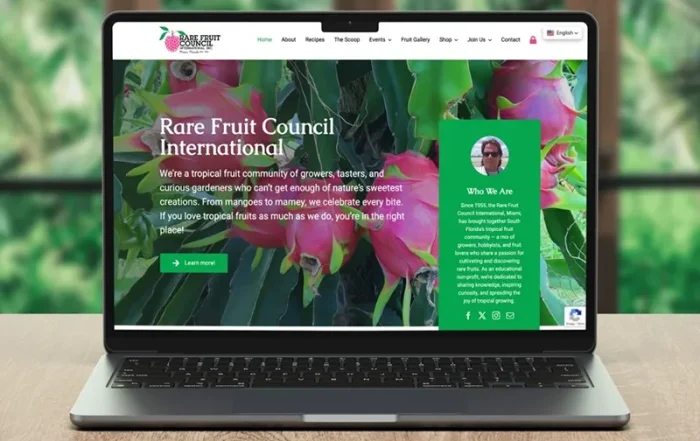
A Website Built for Fruit People (and the Community That Loves Them!)
When Rare Fruit Council International (RFCI) decided it was time for a new website, they weren’t looking for something flashy just for the sake of it. They wanted a site that felt like them [...]

Why Daily WordPress Maintenance Packages Save You Money (and Headaches)
Most small-business websites don’t break overnight — they slowly collect small issues until something crashes. A missed plugin update, a full server, or one hacked theme can cost days of downtime and lost sales. [...]